Parent Networks in Australia
What is a Parent Network? Across Australia, parents are building networks to support one another, share knowledge, navigate challenges and advocate for change. ARACY’s Parent Networks in Australia report maps
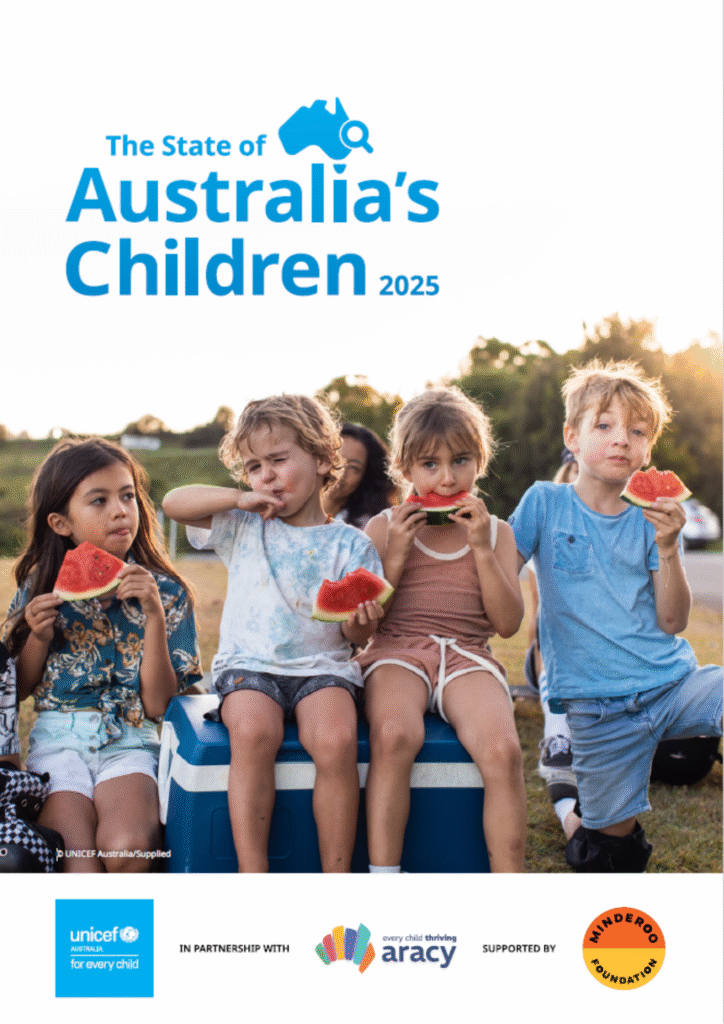
Australia has the economic, social and political conditions needed for every child to thrive — but the latest data shows not every child currently has that opportunity.
This report highlights genuine progress: early childhood education enrolment is rising, key health indicators like immunisation coverage and low birth weight rates remain strong, and the signing of the Better and Fairer Schools Agreement marks a significant step toward more equitable education.
At the same time, systemic inequalities — poverty, intergenerational trauma and racism — mean children in the most at-risk groups continue to fall behind:
Internationally, Australia’s performance is not keeping pace with comparable nations — UNICEF’s Report Card 19: Child Well-Being in an Unpredictable World (2025) found Australia’s available indicators sit below what would be expected given the country’s wealth.
The report calls for a coordinated, rights-based response:
With the right investment and coordination, Australia can create the conditions for every child to thrive.
SHARE THIS
Category
Author
What is a Parent Network? Across Australia, parents are building networks to support one another, share knowledge, navigate challenges and advocate for change. ARACY’s Parent Networks in Australia report maps

With six connected areas, The Nest ensures young Australians have everything they need for the best start in life, helping them reach their highest potential.

Using The Nest, has helped ARACY to be at the forefront of disease prevention and the promotion of holistic health for young Australians.

Here you’ll see some examples of how The Nest has been used in organisations outside of ARACY across Australia.