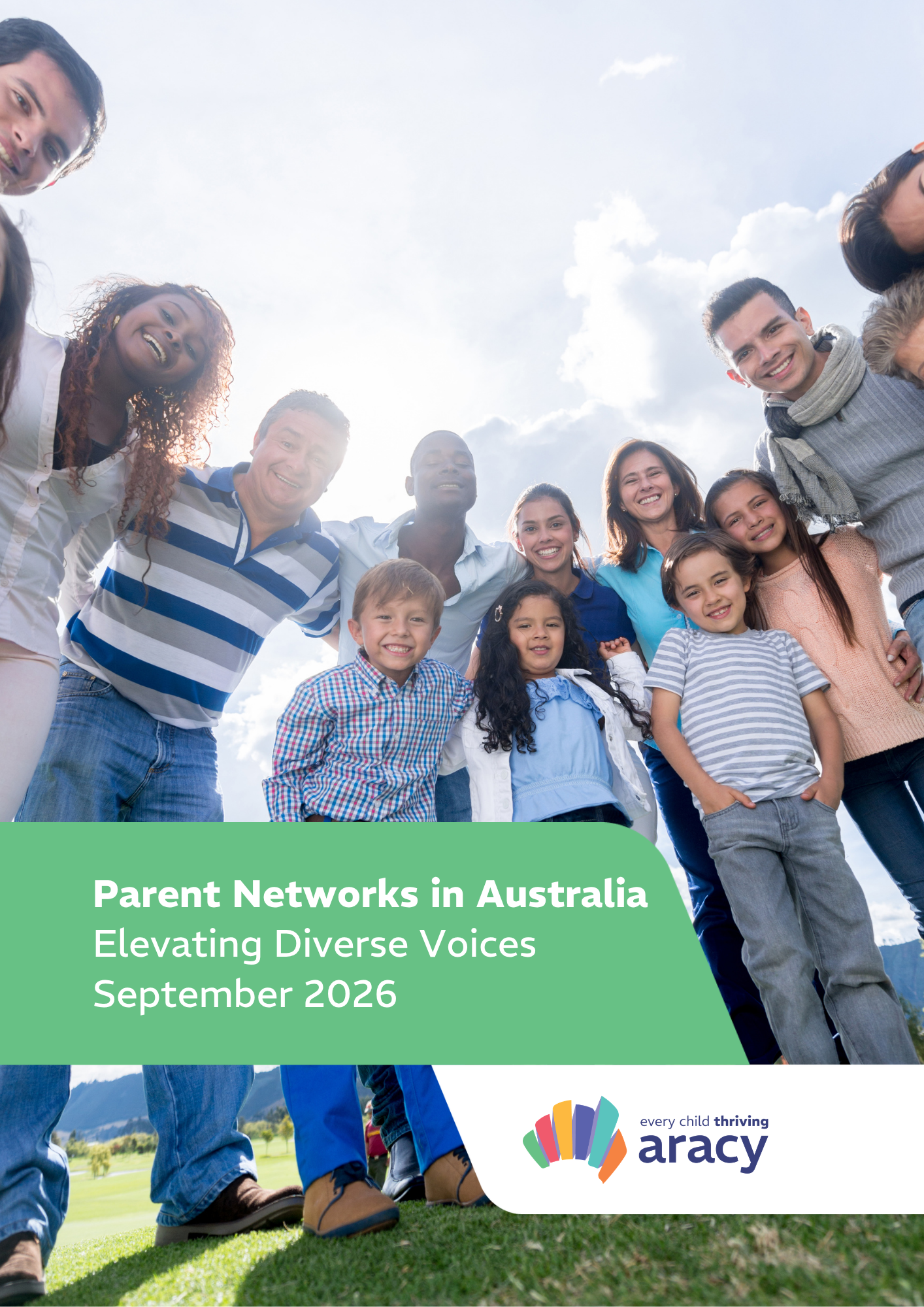
Parent Networks in Australia
What is a Parent Network? Across Australia, parents are building networks to support one another, share knowledge, navigate challenges and advocate for change. ARACY’s Parent Networks in Australia report maps
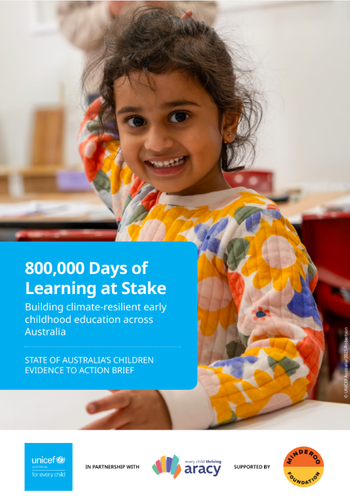
In 2025 alone, Australian children lost an estimated 800,000 days of early learning due to climate-related closures of early childhood education and care services. Floods, bushfires, storms and extreme heat are already disrupting the services children rely on to learn, grow and thrive, and the impacts are not felt equally. Children in disadvantaged and climate-exposed communities face the greatest risk.
This Evidence to Action Brief, the first in the State of Australia’s Children Deep Dive Series, produced by ARACY and UNICEF Australia with support from Minderoo Foundation, examines how climate-related hazards are affecting early childhood education and care across Australia, and sets out the practical policy and investment actions needed to build a more resilient, equitable and sustainable system.
Watch the 800,000 Days of Learning at Stake, the State of Australia’s Children Evidence to Action Brief on climate change and early childhood infrastructure launch webinar.
Watch the 800,000 Days of Learning at Stake, the State of Australia’s Children Evidence to Action Brief on climate change and early childhood infrastructure launch webinar.
Webinar slides
Key findings
In 2025:
The first five years of life are critical — 90 per cent of a child’s brain development occurs in this period. Early childhood education and care services play a central role in supporting children’s development, relationships and sense of security during these years. When climate events force services to close, children miss out on opportunities to learn, build relationships and develop critical social and emotional skills.
What needs to change
The report calls on governments to:
Resources about Early Childhood Education and Care and Climate Resilience:
Queensland University: Brain Health and Early Development Research Group
Queensland Kids Partnership: Thriving Kids in Disasters (TKiD)
Youth Empowered Towards Independence (YETI) Schools Up North Program
Youth Empowered Towards Independence (YETI) Kowanyama Youth Profile
SHARE THIS
Category
Author
What is a Parent Network? Across Australia, parents are building networks to support one another, share knowledge, navigate challenges and advocate for change. ARACY’s Parent Networks in Australia report maps

With six connected areas, The Nest ensures young Australians have everything they need for the best start in life, helping them reach their highest potential.

Using The Nest, has helped ARACY to be at the forefront of disease prevention and the promotion of holistic health for young Australians.

Here you’ll see some examples of how The Nest has been used in organisations outside of ARACY across Australia.