Get Involved
Young and Wise 2026 Roundtables
What young people from five priority communities told us about wellbeing, services and systems
Young and Wise Series 2 is ARACY’s 2026 report on how national policy lands in young people’s everyday lives. Fifty-three young people from rural, regional and remote, LGBTIQA+, culturally and linguistically diverse, neurodivergent and First Nations communities shared what helps, what gets in the way and what should change. A survey of 238 young people adds wider context.
53 young people
5 priority communities
238 survey responses
Funded by the Australian Government Department of Health, Disability and Ageing’s Health Peak and Advisory Bodies Program.
Six things young people told us in 2026
Services are out of reach.
Support is hard to access because of cost, transportation, long waits, complicated pathways, and a lack of trust and cultural safety. In the survey, youth-specialist physical and mental health care was the top investment priority.
Schools shape wellbeing, for better or worse.
Positive school cultures and supportive staff help young people thrive. Academic pressure, bullying and inconsistent support undermine them.
Discrimination goes unaddressed.
Young people described racism, ableism and homophobia, and want accountable, transparent action instead of policies that exist only on paper.
Money worries touch everything.
Housing insecurity, food costs and limited digital or transport access affect health, learning and safety. When money was tight, survey respondents said the biggest effect was more stress and tension at home.
Identity and culture are strengths.
Cultural connection, community, neurodivergent identity and queer joy were described as foundations that systems need to recognise and support.
Asking young people has to lead to change.
Young people want engagement that is accessible, paid, and visibly linked to real decisions, not one-off consultations.
Six recommendations from young people in 2026
The report turns what young people said into six strategic policy focus areas for governments, particularly across health and education.
- Make health and wellbeing services accessible, trusted and identity-responsive. Move from services that exist to services young people can actually use: affordable, within reach, culturally safe and built around how they live.
- Strengthen schools as inclusive wellbeing settings. Treat schools as wellbeing environments, with sustained wellbeing education, enforced action on discrimination, culturally safe and sensory-friendly practice, food access and clear pathways after school.
- Address material basics as foundations for wellbeing. Treat housing, food, transport, digital access, income and the cost of care as foundations for young people’s health, learning and safety.
- Invest in belonging, identity, culture and community connection. Support culture and Country, cultural belonging, queer joy, neurodivergent identity and safe online and offline communities as protective for wellbeing.
- Build paid, supported and accountable youth leadership pathways. Move from one-off consultation to sustained youth leadership, with payment, recognition, feedback and real decision-making power.
- Close the implementation gap between policy intent and lived experience. Test policies against whether young people can see, access and trust them in daily life.
Read the full policy analysis in the report
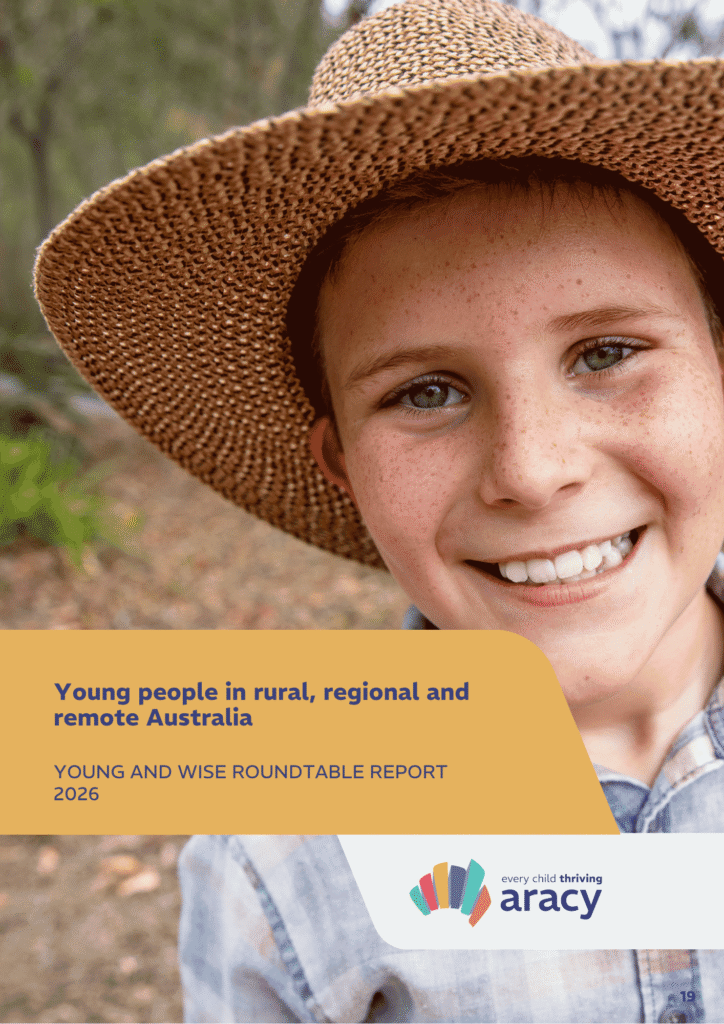
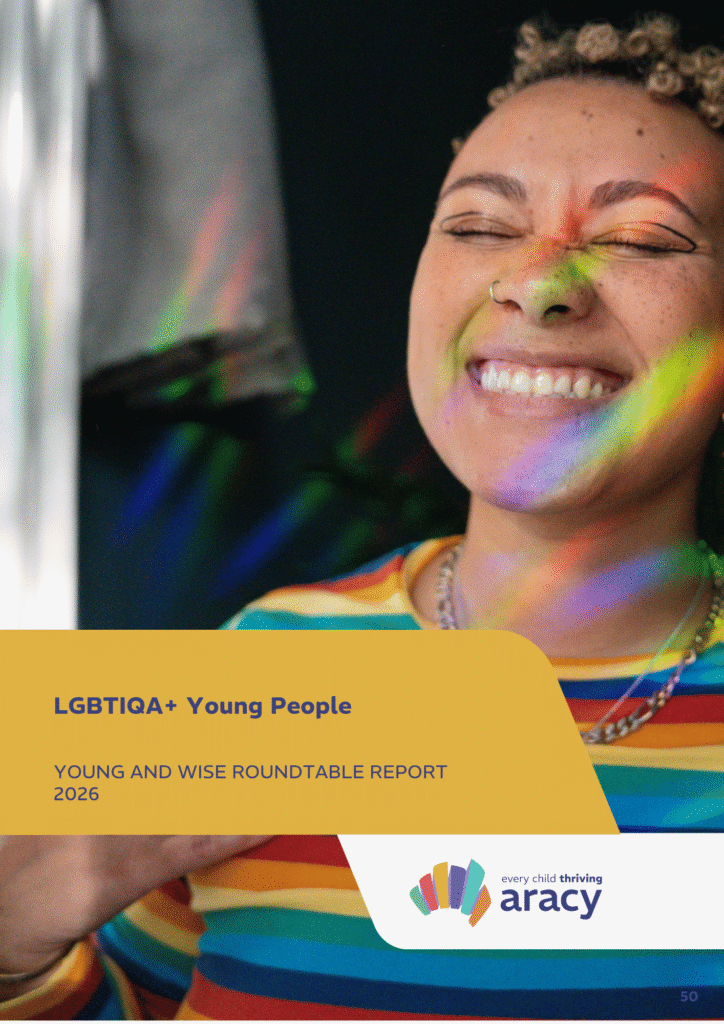
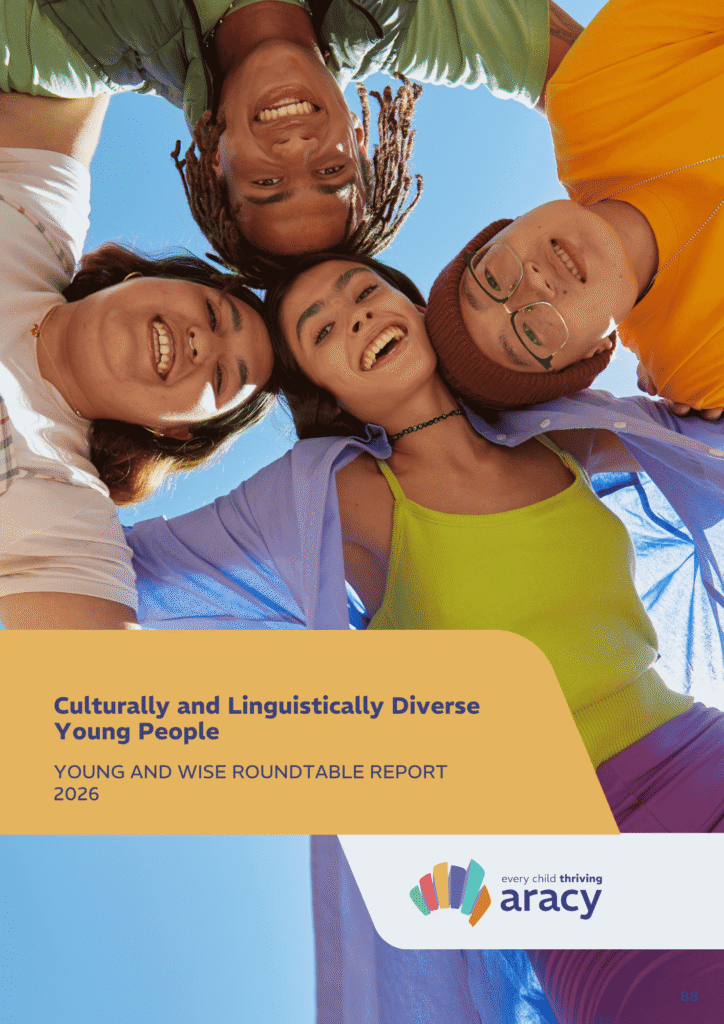
Culturally and linguistically diverse young people. Strongest message: diversity without accountability is not enough.
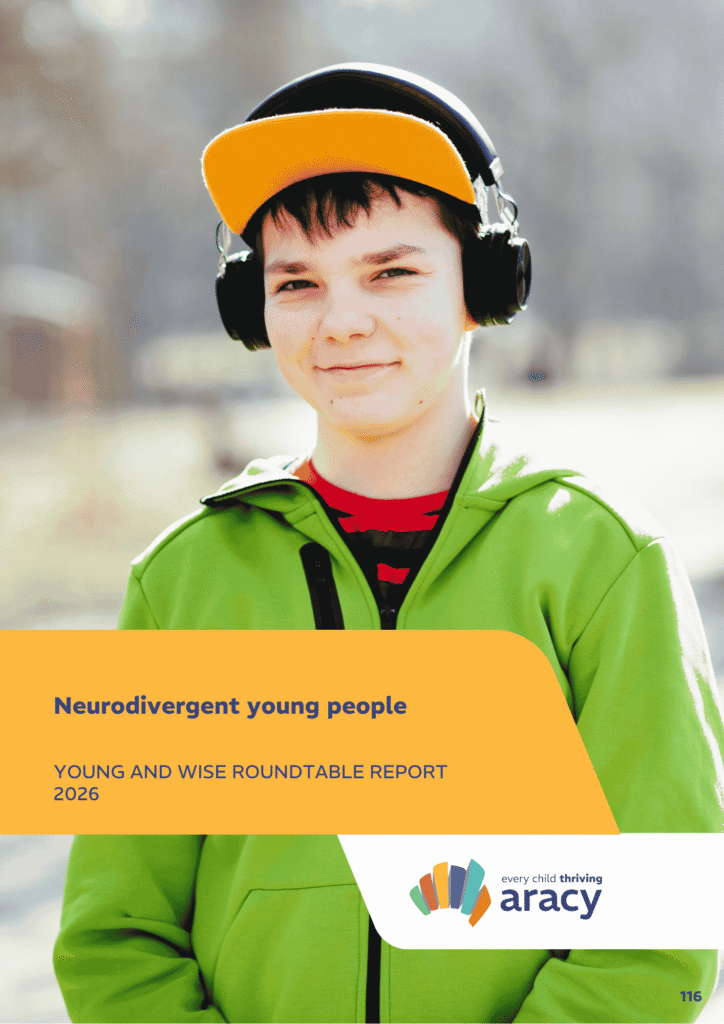
Neurodivergent young people. Strongest message: systems need to adapt to young people, not the other way around.
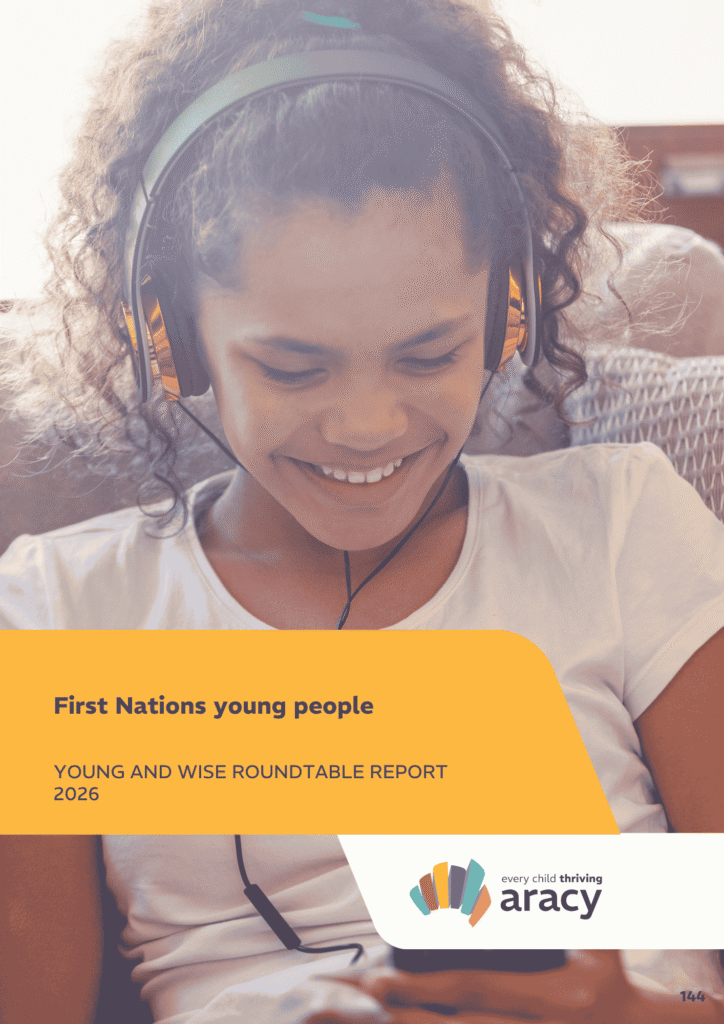
First Nations young people. Strongest message: cultural safety is fundamental to wellbeing.
What is the Young and Wise Series 2 report?
Young and Wise Series 2 is ARACY’s 2026 report bringing together roundtables with 53 young people from five priority populations: rural, regional and remote, LGBTQIA+, culturally and linguistically diverse, neurodivergent and First Nations. It shows how services, schools and systems work in practice, and what young people want changed. It is based on lived experience, not a prevalence study.
Who took part?
Fifty-three young people aged 10 to 25 took part in roundtables, interviews and written input, with 69 attendances recorded because some joined more than one cohort. Every state and territory except Tasmania was represented. A separate survey gathered responses from 238 young people who were not the roundtable participants.
What do young people say about health?
Young people described health as more than clinical care. They want timely, affordable and trusted support, services that understand their identity, culture, disability and location, and early help before problems escalate. Across all five cohorts, they said a service being available is not the same as being usable: cost, travel, waiting times and staff shortages got in the way.
What do young people say they need most?
In the survey budget exercise, healthcare teams specialising in young people’s physical and mental health ranked as the top investment priority. Food and cost-of-living support for families came second. In the roundtables, young people in every cohort described barriers to timely, safe and appropriate care.
What did young people say about wellbeing education at school?
Young people across all five cohorts described wellbeing education as arriving too late, delivered in one-off sessions and thin on the topics that matter most to them, including mental health, racism, discrimination and sexual health. They want practical, sustained education that builds across year levels, in schools that enforce inclusion and anti-bullying policies.
What do young people want from parents and carers?
Survey respondents said parents and carers should put their children’s mental and physical health first, followed by giving them a real say in decisions that affect their lives. Keeping up with technology ranked lowest. The advice from young people was to worry less about screens and focus more on listening.
Do the findings represent all young Australians?
No. The roundtables were scoping exercises with small, largely self-selected groups, and the online format may have excluded some young people. Findings are indicative lived-experience signals for each population, not representative results. Remote and very remote communities were less represented among rural, regional and remote participants.
How can governments use the findings?
The report sets out six strategic policy focus areas: accessible and identity-responsive services, inclusive schools, material basics, belonging and culture, paid and accountable youth leadership, and closing the gap between policy intent and lived experience. Young people’s experience is offered as an implementation signal for health and education policy.
What is The Nest?
The Nest is ARACY’s national wellbeing framework. It describes six connected domains: Healthy; Valued, Loved and Safe; Material Basics; Learning; Participating; and Positive Sense of Identity and Culture. The Series 2 report uses these domains to organise its cross-cohort findings.
Explore series 1
Over 62 young people aged 14 to 25 joined deep-dive roundtables on social media age restrictions, alcohol and other drugs, sexual health and nutrition.

Young and Wise Series 1 Roundtables
Young and Wise Report
Five years of what children and young people have said they need to thrive.
Young and Wise Report
Sign up for all the latest news and opportunities
Under 25 and want your voice heard?
Join Young and Wise to stay in the loop on opportunities to share your voice, connect with other young people, and influence real change.
Sign up now to get the latest news, insights on youth health and wellbeing, and ways to get involved!
FOR YOUNG PEOPLE
Are you a young person passionate about making a difference?
Or are you an organisation looking to collaborate to strengthen youth voices?