What We Do

Supporting Children’s Wellbeing in the Early Years
“Wellbeing” is a term used constantly across early years work, but it doesn’t always mean the same thing to everyone in the room. For an educator it might mean physical safety, for a health professional it’s developmental milestones, for a family support worker it’s a child’s sense of belonging at home. That gap in shared understanding makes it harder to fully support the health, safety, and wellbeing of children, and harder still to have consistent conversations about what a child actually needs, whether that’s between colleagues, across services, or with a family.
ARACY works to close that gap. As the national body dedicated to improving outcomes for Australian children and young people, we bring the evidence, and the voices of children and young people themselves, together into a single shared understanding of wellbeing: The Nest.
For those working in early childhood education and care, this sits alongside the Early Years Learning Framework‘s own focus on wellbeing, one of its five Learning Outcomes. But The Nest isn’t limited to the classroom — its shared language works just as well for health services, family support, and any early years setting where different practitioners need to be talking about the same thing.
Below, four resources give you a way in.
The Wellbeing Playlist, a collection of 12 StoryBox Hub titles that centre around children’s wellbeing
A self-paced, online course to understand what child wellbeing really means, and how to put it into practice.
A children’s storybook inspired by the State of Australia’s Children report, a collaboration between UNICEF Australia and ARACY, supported by Minderoo Foundation.
In this webinar, Dr Nat Kendall-Taylor shares new findings on how Australians think about the early years.
Search through our extensive Resource Library including Research papers, Submissions, Reports and much more.

With six connected areas, The Nest ensures young Australians have everything they need for the best start in life, helping them reach their highest potential.

Using The Nest, has helped ARACY to be at the forefront of disease prevention and the promotion of holistic health for young Australians.
Here you’ll see some examples of how The Nest has been used in organisations outside of ARACY across Australia.
What is wellbeing?
To help create a shared understanding, ARACY partnered with Emerging Minds to produce a short, engaging animation that brings the concept of wellbeing to life. The video introduces The Nest—Australia’s national wellbeing framework for children and young people. Developed by ARACY, The Nest is grounded in robust evidence, informed by research, expert advice, and, importantly, the voices of children and young people themselves.
For early years educators, this aligns closely with the Early Years Learning Framework (EYLF), which highlights “Children have a strong sense of wellbeing” as one of its five Learning Outcomes. The Nest builds on this outcome by offering a common language and understanding across six key domains of wellbeing.
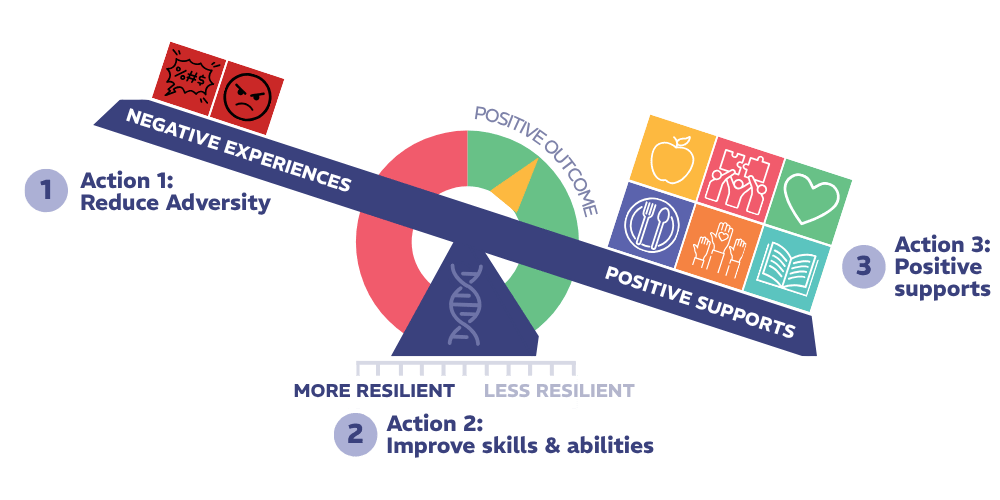
The Resilience Scale builds on this further, showing how three things work together to tip the balance toward positive outcomes for children: reducing adversity, improving skills and abilities, and adding positive supports.
We invite you to watch the animation, explore the Resilience Scale, and consider how The Nest can enrich your work with children and families. Together, we can build nurturing environments that give every child the best start in life.
The Nest in the early years
“Wellbeing” gets used constantly in early childhood education, but it doesn’t always mean the same thing to everyone in the room. That gap makes it harder to support the children in your care.
The Nest is Australia’s national framework for child wellbeing, developed by ARACY with children and young people’s voices built into the evidence behind it. Explore the slideshow below to see how each domain shows up in everyday early years practice, from a nutritious lunch to a child having a say in their daily routine.