“This research suggests that a good story, well told, in ways that activate helpful mindsets and avoid unhelpful ones, could actually help the evidence cut through and shift the odds for children.”

Melodie Potts-Rosevear OAM, ARACY CEO
Most of us assume the public needs more evidence about the early years. This research points somewhere else.
Australians already believe young children are shaped by everything around them. They also believe raising a child is a family’s job alone. Both ideas live inside the same person, at the same time.
In this webinar, Dr Nat Kendall-Taylor shares new findings on how Australians think about the early years. These deep beliefs have now been measured across the population. And they predict which policies people will get behind.
ARACY CEO Melodie Potts Rosevear and Curijo Co-CEO Tina McGhie join Nat.
What you’ll hear
“It’s not about fixing us, it’s about supporting us.” — Tina McGhie, Co-CEO, Curijo
Scroll down for the resources mentioned in the session.
Your questions are answered below the video.
Measuring Early Years Mindsets: Patterns of Thinking that Shape Australia’s Future
New research shows most Australians recognise that children and families need greater support, but understanding of what actually shapes early childhood development is uneven. Measuring Early Years Mindsets, from the FrameWorks Institute in partnership with Curijo and Minderoo Foundation, looks at the mindsets Australians hold about the early years, and why shifting these is central to changing policy and child- and family-serving systems.
Drawing on a nationally representative survey conducted in February 2026, the report examines how these mindsets vary across groups, how they cluster together and how they relate to support for solutions. It’s written for advocates and communicators working across the systems that affect children and families, including early years, housing, employment, justice, health, education and transport.
The report closes with initial recommendations for advocates and communicators working to shift public thinking and build demand for change.
In the latest report from the Measuring Early Childhood Mindsets in Australia, we found that mindsets such as Individualism and Family Bubble—the idea that parents are exclusively responsible for children’s outcomes–remain dominant in Australian public thinking. These mindsets can make it hard for people to see the role of broader systems and communities in ensuring child wellbeing across Australia.
While we have yet to conduct framing research to identify specific reframing strategies to counter these mindsets, our mindsets research reveals that the Australian public also holds more collectivist thinking in the Government as Partner and It Takes A Village–-the idea that families, communities and society play a role in children’s development. Leveraging these mindsets—through, for example, talking about the ways that government can and should play a role in supporting this ‘village’ -can help to expand this thinking and overcome the individualistic thinking that often dominates public thinking and conversations in Australia.
When considering reframing strategies, it’s important to start from the perspective of what you want to change: which ways of thinking (or mindsets) do you want to shift, and to what ends? To shift thinking on a number of issue areas, it can be useful to focus on cross-cutting or ‘foundational’ mindsets—ways of thinking that structure people’s understandings of a variety of issues. In this project, we have measured endorsement of the cross-cutting mindsets of Individualism, Fatalism, and Otherism. These mindsets are employed to think about a range of issues, which means that shifting thinking away from these unproductive and even harmful mindsets can help to shift thinking on a number of social issues. Some of these mindsets (Fatalism and Otherism) are also negatively connected to policy support–which means that when people employ these mindsets, they are less likely to support policy reforms to improve children’s wellbeing. Shifting thinking away from these mindsets—and towards more productive thinking such as Government as Partner, which is positively connected to policy support–can help build support for policy change.
When we test framing strategies, we’re always measuring how they build support for broader systems and policy change. While we have not yet tested specific framing recommendations as part of this project, when we do, we will measure their effectiveness at increasing policy support among research participants.
Our research has found that mindsets are shared across demographic groups, but there are also important differences between groups. Knowing how mindsets differ in strength between demographic groups can inform communications and audience strategy.
Family Bubble, Passive Development and Individualism are strongly endorsed across demographic groups. This is consistent with our previous research and shows the strength of these mindsets in shaping public thinking about the early years. However, strong does not mean immovable. Dominant mindsets may be hard to shift and take time to move, but consistent framing and disciplined narrative strategy can push these mindsets to the background while activating and strengthening more productive ones.
It Takes a Village, Structural Racism, Otherism and Racism is in the Past vary in strength across demographic groups. The variation in endorsement of these mindsets suggests that these are not settled or uniformly held ways of making sense of the early years; instead, they are areas where different people are being pulled in different interpretive directions. This contestation suggests that these mindsets may be especially important leverage points for communications and engagement efforts because they mark places where understandings are still in flux rather than firmly entrenched across the population. At the same time, the uneven distribution of these mindsets suggests the value of targeting interventions towards groups that are more strongly oriented towards unproductive ways of thinking, where there may be the greatest need — and opportunity — for movement.
Conversely, groups that are already more productively situated in terms of mindset strength may require less intensive effort, allowing resources to be focused where they can have the most impact.
Our research has found that Australians tend to “age up” when thinking about early childhood, which can make it hard for people to see the importance of supporting child development from birth.
FrameWorks have worked in the early childhood field for over 25 years to successfully support shifts in thinking and public support for policy change. We focused particularly on helping the field shift away from the ‘vulnerable child’ frame and towards the ‘developing brain’ frame. In our previous research, we tested and recommended using the metaphor of Brain Architecture to talk about the importance of early childhood development—how the basic architecture of the brain is built in early life and continues into adulthood. We also tested and recommended a Serve and Return metaphor to explain the interactions between children and caregivers that shape brain circuitry and are fundamental to the wiring of the brain.
Find out more:
Framing Child Development and Care in Australia – FrameWorks Institute
Child Development – FrameWorks Institute
While we have not yet tested framing strategies for this current project, we have found in other work on children and families that rights-based framing can unintentionally trigger unproductive thinking, including Us vs. Them thinking about who ‘deserves’ to have rights. It would be interesting to see whether rights-based framing is effective in future research.
While there are many ways to make sense of the concept of culture, one useful way of understanding it is through cultural mindsets. Cultural mindsets (or mindsets, for short) are deep, implicit patterns of thinking that shape how we understand the world and how we make decisions. In shaping how we think, mindsets structure and produce our beliefs and attitudes and how we act in the world.
The mindsets that we hold can normalise or problematise the existing social order and, in turn, shape whether we support social change and which sorts. For example, individualistic mindsets lead people to assume that life outcomes are the result of individual choice and willpower and that solutions involve people cultivating self-reliance and pulling themselves up by their bootstraps. Individualism affirms that people have control over outcomes but also makes it difficult to see how broader environments, contexts and systems affect our lives. When people think individualistically, it can lead them to conclude that policies designed to change systems—for example, the systems that produce wealth and income inequalities—are unnecessary or misguided.
We all have multiple mindsets that we can use to think about a given issue. For example, while people in Australia often think individualistically, they also have access to mindsets that allow them to see that what surrounds us, shapes us. When these more contextual mindsets are activated, they bring social systems into view and highlight the ways that context shapes outcomes alongside individual choices. They also lead us to recognise the need for policies that change contexts and systems.
Cultural mindsets are highly durable. They emerge from and are tied to cultural and social practices and institutions with deep historical roots. While we typically focus on cultural mindsets that emerge from common social practices and institutions on a national level, it’s important to recognise that different people and groups will engage with these common mindsets in different ways. For example, a mindset can be more salient— more frequently drawn upon and more consistently used in thinking—for one group than for another. In addition, cultural subgroups within society also have access to distinctive mindsets that emerge from institutions and practices specific to those groups.
The following are ways that mindsets can shift:
How does cultural mindsets research differ from public opinion and other social survey research?
Public opinion research examines the explicit attitudes and preferences that people hold about specific issues. Cultural mindsets research explores the deeper, underlying ways of thinking that shape and explain these patterns in public opinion. Where public opinion research examines what people think, cultural mindsets research examines how people think. For example, public opinion research might show that parents are concerned about children’s screen time and social media use. Cultural mindsets research explains why this is, revealing the role that the Threat of Modernity (Technology) mindset — which assumes that modern technology is inherently dangerous and threatens children’s wellbeing — plays in driving these opinions. In addition, public opinion and other survey research often segment people into distinct groups with the understanding that there are some people who hold one view and others who hold another. While cultural mindsets research can and should attend to group differences in how mindsets are held and used, it is premised on the idea that to some extent, people across groups within a society have access to.
common mindsets and that people can and do draw on different mindsets at different times. This focuses our attention on common ways of thinking and the strategic importance of shared ways of making meaning, while also acknowledging and making room for differences among individuals and groups in how they think about social issues.
Pairing mindsets research with segmentation research can be powerful. Mindset work can reveal the shared ways of thinking that guide understanding, emotional engagement and solutions support, while audience-specific research can help with figuring out how to best activate or deactivate these mindsets for different groups of people. In presenting findings, we focus on shared mindsets, but we are also careful to highlight variations in the ways that groups use mindsets to inform their thinking. This work in understanding mindsets can help inform strategy and drive follow-up research.
For more on cultural mindsets and mindset shifts, see Mindset Shifts: What Are They? Why Do They Matter? How Do They Happen?
Find out more: https://www.frameworksinstitute.org/articles/fact-sheet-6-things-to-know-about-cultural-mindsets/

How we talk about children and families shapes what people will support
Words matter. New research shows Australians hold competing, deeply ingrained mindsets about the early years, and which one is switched on in a given moment changes what people see as the problem, who they hold responsible and which solutions feel sensible.
The QKP Framing Initiative has spent years building an evidence base on this, in partnership with the FrameWorks Institute. Its Framing for Change Learning Hub brings that research together in one place: an introduction to strategic framing for those getting started, Australian and international reports, framing theory, tested metaphors, recorded webinars and real-world case studies.
Whether you’re new to framing or already applying it in your communications, the hub is designed to meet you where you are, including a 10-page Framing Checklist you can put to use straightaway.
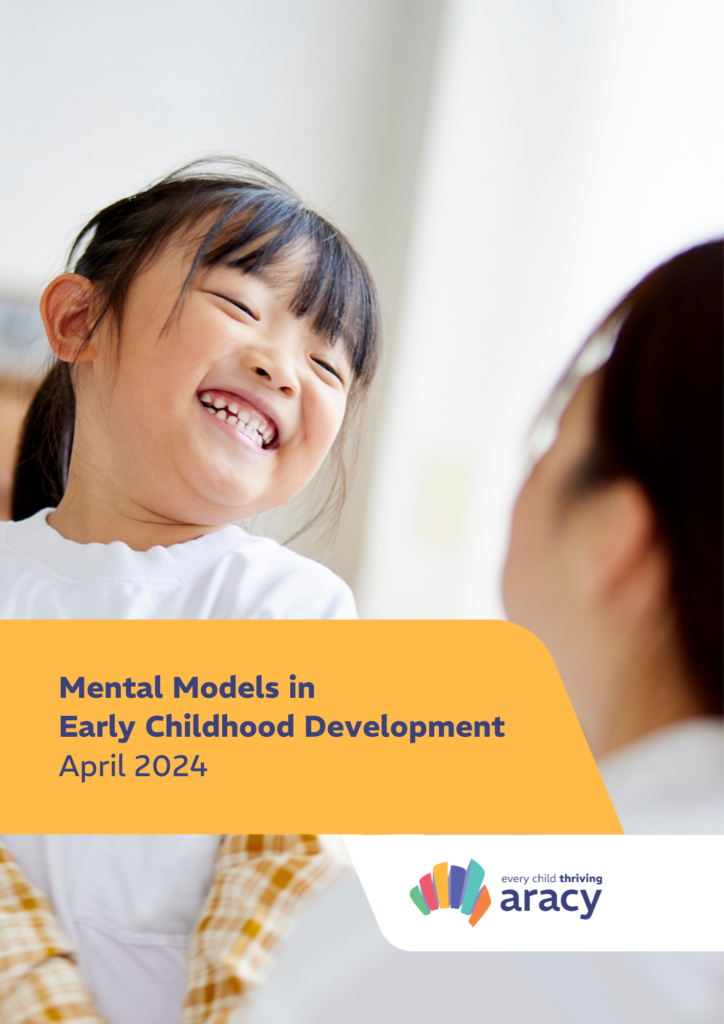
Related reading: Mental Models in Early Childhood Development
Awareness campaigns about the early years have worked. Believing the facts, on their own, hasn’t built the public and political will to back children. This ARACY and Frameworks Institute report shows why, and how framing our communications differently can shift that.
By Diana Harris, ARACY Lead, Strategy and Operations
SHARE THIS

With six connected areas, The Nest ensures young Australians have everything they need for the best start in life, helping them reach their highest potential.

Using The Nest, has helped ARACY to be at the forefront of disease prevention and the promotion of holistic health for young Australians.

Here you’ll see some examples of how The Nest has been used in organisations outside of ARACY across Australia.