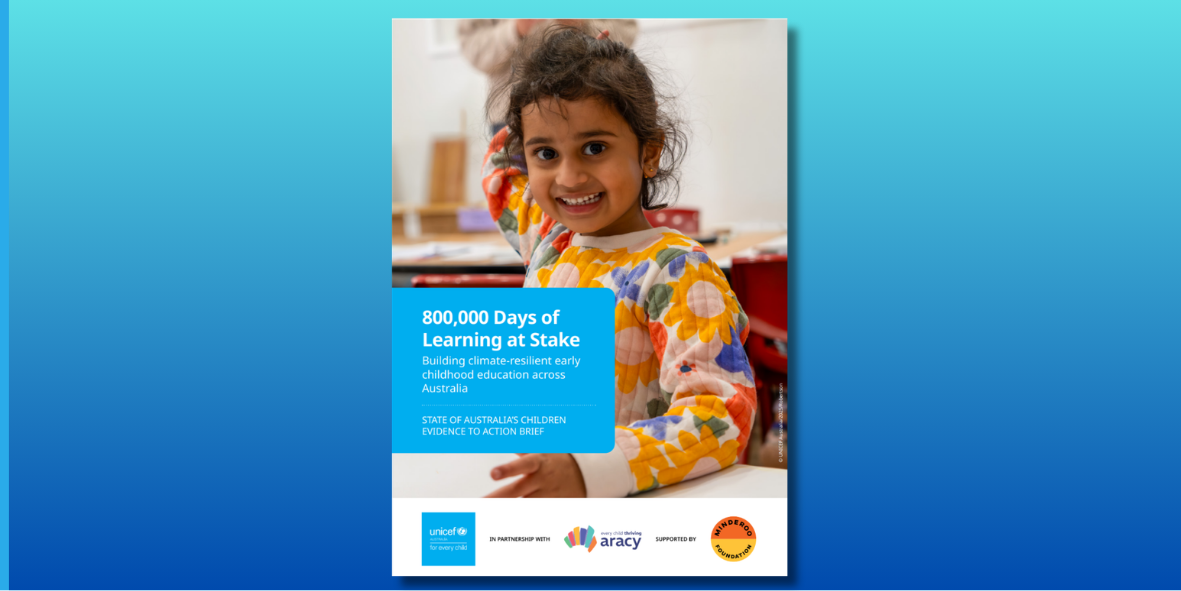
Australian children lost an estimated 800,000 days of early learning in 2025 due to climate-related closures of early childhood education and care (ECEC) services, according to a new national report released today by the Australian Research Alliance for Children and Youth (ARACY) and UNICEF Australia in partnership with Minderoo Foundation.
The 800,000 Days of Learning at Stake: Building Climate-Resilient Early Childhood Education Across Australia report finds climate change – and increasingly severe and frequent climate-related hazards – are already disrupting the systems children rely on to learn, grow and thrive. Floods, bushfires, storms and extreme heat are increasingly affecting early learning services across the country, creating disruptions for children, families and communities.
In 2025 alone:
The impacts are not experienced equally, with children in disadvantaged and climate-exposed communities facing the greatest risk.
The first five years of life lay the foundations for a child’s future. During these years, children develop the skills, relationships and sense of security that shape their health, wellbeing and opportunities throughout life. Ninety per cent of a child’s brain development occurs in this period. Early childhood education and care services play a critical role in supporting this development.
Alice Hall, Chief Advocate for Children at UNICEF Australia, said climate change is no longer a future threat for children – it is already affecting their daily lives and development.
“For young children, every day of learning matters. Early childhood education provides a stable, supportive environment that children need during one of the most important periods of development. When climate events force services to close, or impact how they can deliver services, children miss out on opportunities to learn, build relationships and develop critical social and emotional skills. Families and communities feel these impacts too.”
“As climate impacts become more frequent and severe, we need to ensure the services children rely on are designed to stay open, recover quickly and continue supporting children and families when they need them most.”
Melodie Potts Rosevear OAM, CEO of ARACY, said
“Children do best when the services they rely on stay open and safe. This report shows how we protect that reliability.”
“Through initiatives like our Queensland Kids Partnership – Thriving Kids in Disasters project, we have seen children recover and grow after disasters when the right support is there. “Early learning services are more than buildings. They are trusted educators, familiar routines and safe spaces. Investing in their resilience protects children’s chance to learn, connect and thrive”.
“Australia already knows what good practice looks like. Now is the moment to back it and build it into every service, before massive climate disruptions become the new normal.”
John Hartman, CEO at Minderoo Foundation, said current reforms to Australia’s early childhood education and care system presents an important opportunity to prioritise climate resilience in planning, funding and service delivery from the start.
“Early learning plays a critical role in a child’s development and helps lay the foundation for lifelong wellbeing, learning and opportunity. As governments invest in the future of Australia’s early childhood education and care system, we have a responsibility to ensure those services can withstand the growing impacts of climate change and continue supporting children where and when they need it most.”
The report argues that early learning services should be recognised as essential community infrastructure and prioritised in climate adaptation planning. It calls on governments to strengthen climate resilience across the sector through targeted investment, improved planning frameworks, climate-adaptive design standards and support for services operating in high-risk and underserved communities.
ENDS
About the report
800,000 Days of Learning at Stake: Building Climate-Resilient Early Childhood Education Across Australia is the first Evidence to Action Brief in the State of Australia’s Children Deep Dive Series. The report examines how climate-related hazards are disrupting children’s access to early learning and outlines practical policy and investment actions to build a more resilient, equitable and sustainable early childhood education system.
Media contacts
Heather Richardson, Minderoo Foundation
0429 313 260
hrichardson@minderoo.org
SHARE THIS

With six connected areas, The Nest ensures young Australians have everything they need for the best start in life, helping them reach their highest potential.

Using The Nest, has helped ARACY to be at the forefront of disease prevention and the promotion of holistic health for young Australians.

Here you’ll see some examples of how The Nest has been used in organisations outside of ARACY across Australia.