By Fatima Ali (she/her)
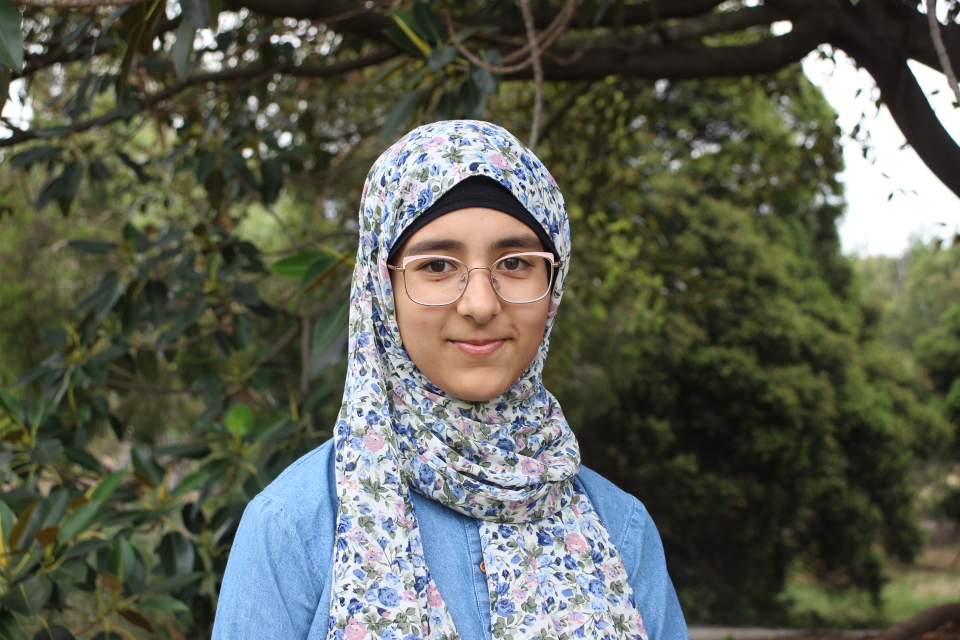
Fatima Ali is a 15-year-old student and youth advocate passionate about education reform and ensuring young people have a voice in the policies that affect them.
A student’s experience of education should never be determined by geographical location or their school’s level of resources, yet it is.
Education equity for children and young people in low socio-economic schools is something that is not talked about or taken enough action in schools and in society.
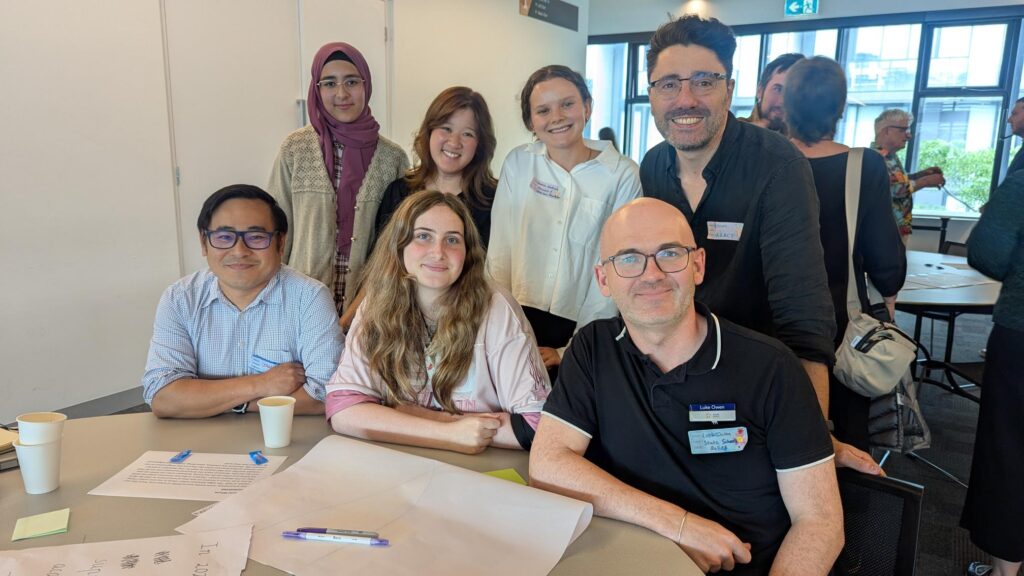
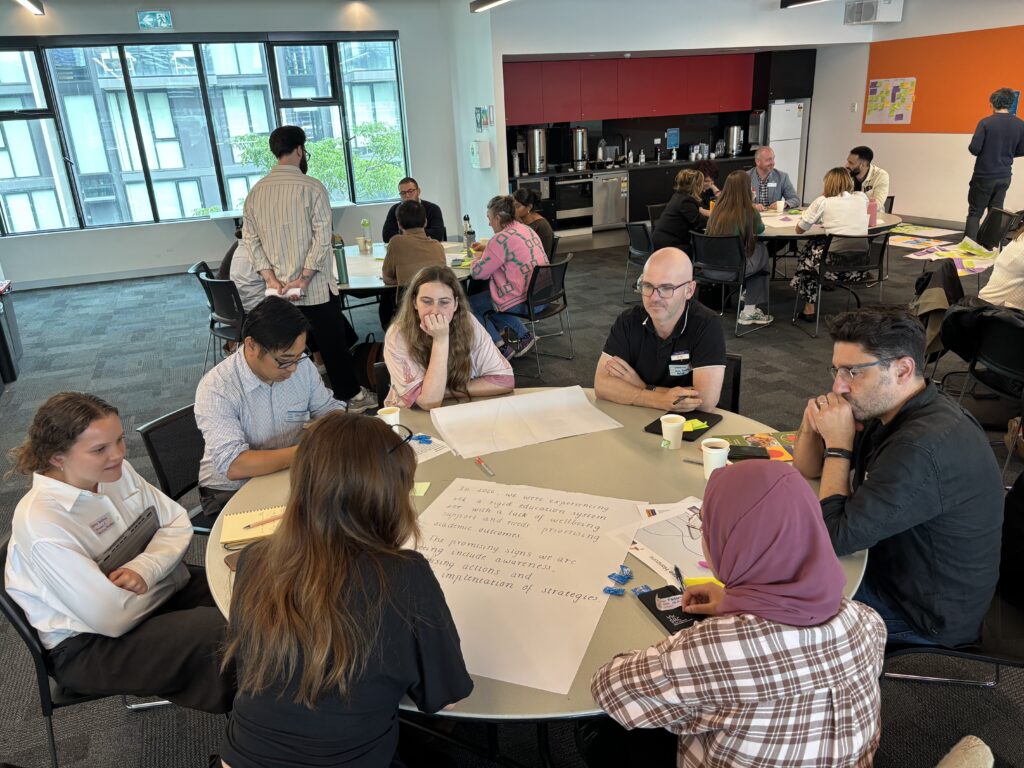
Recently, the Education Equity Alliance (EEA) began the Three Horizons process for establishing a shared, practical vision for education equity for low-SES schools in Victoria. Workshop One in Melbourne last week on Tuesday 3 March, kickstarted the three-part process. It brought together stakeholders including young leaders, educators, representatives from the Department of Education and many other invited Victorian and national organisations.
Attending the event was such an insightful experience, and the conversations, passion and shared vision for addressing inequity in schools, gave me hope and reassurance for the future of our education system.
In Workshop One, we focused on understanding what current equity in low socio-economic schools looks like, strategies that are working and what’s missing, and began discussion around what needs to change. I resonated deeply with the conversations and had the opportunity to share my own experience of education inequity at my past low socio-economic school.
I’m a 15 year old student and youth advocate from a culturally and linguistically diverse background. After migrating to Australia, I joined a primary school in a low socio-economic community, which I attended from year 3-6. Experiencing this environment after previously having attended a private British school, was a complete cultural shock.
For me, and many others, it wasn’t our family’s economic status that exposed us to inequity at school, but rather our school’s location, uninclusive processes and lack of resources and support, which created disengagement from the system and widespread ‘inappropriate’ behaviour – significant issues which were addressed by a detention here and a suspension there.
Something my table group discussed at the EEA Three Horizons Workshop One was the need for changing the attitude of punishing children and young people, especially in low SES schools, as many students’ situation is not properly understood. Instead, an environment of discussion should be fostered to recognise how to approach situations and issues.
Being in this welcoming space, meeting and collaborating with like-minded people from different organisations, including adults who truly value young people’s voices, was such a comforting feeling. It was an environment and attitude that I and other young people highlighted as something we don’t often experience at other events. I found it welcoming to hear that our contributions were valued, but it also made me question why our voices are not being taken into account in some other spaces, particularly with high-level stakeholders. Young people are the experts of what we are experiencing, and change targeted towards us, such as education equity, can only happen when the role of young people shifts from ‘participants’ to ‘leaders’ in change.
To address education inequity, awareness and action must both happen, but awareness comes first as action cannot be taken for something whose nature and impacts are invisible to many.
Many times, it comes down to the stereotype that education inequity only occurs within ‘poor’ families. But the truth is, there are many factors that combine to create this problem that we are seeing, not just in Victoria, but also in wider Australia and in many other countries around the world. This includes disengagement with the education system, less government funding and prevalence of people of certain demographics who may experience an education that is unbalanced and exclusionary. Societal re-education of what education inequity is and why it persists is just the first, but vital step.
A quote from the workshop that really struck with me was:
The world doesn’t change one person at a time. It changes as networks of relationships form among people who discover they share a common cause and vision of what’s possible.
Margaret Wheatley, Founder of The Berkana Insitute
There is a lot to be done to achieve education equity in low socio-economic schools, but I know we can do it together. Children and young people need understanding and resources, regardless of where we live. We deserve clarity, opportunity, and support – things that should never be too much to ask for.
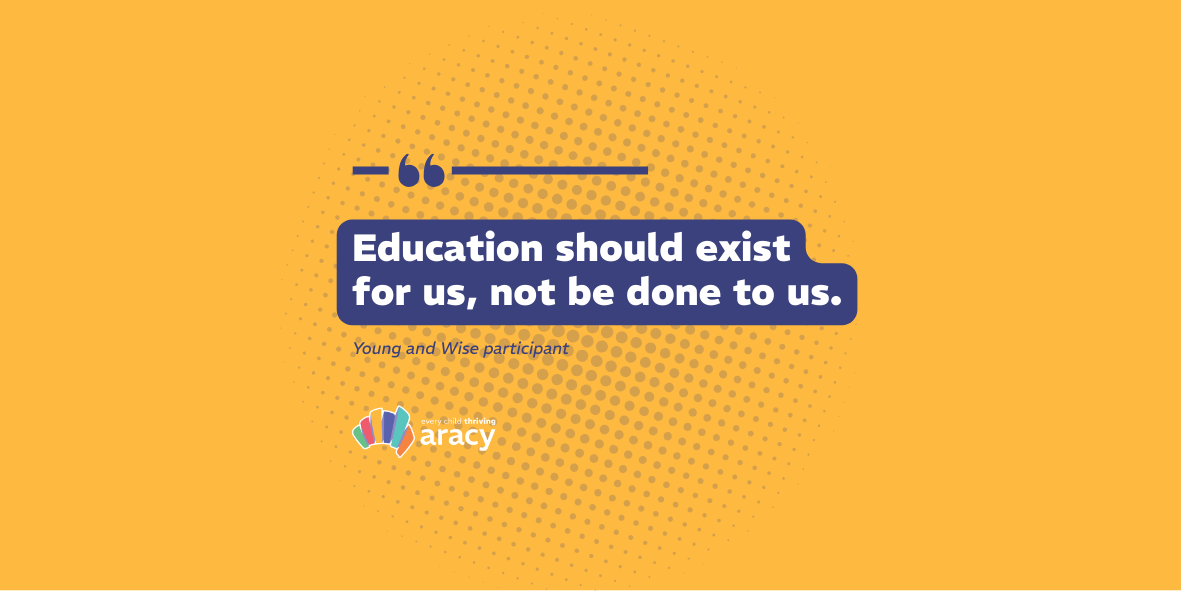
Education should exist for us, not be done to us.
SHARE THIS

With six connected areas, The Nest ensures young Australians have everything they need for the best start in life, helping them reach their highest potential.

Using The Nest, has helped ARACY to be at the forefront of disease prevention and the promotion of holistic health for young Australians.
Here you’ll see some examples of how The Nest has been used in organisations outside of ARACY across Australia.